Top Provider of Holistic Women’s Health & Wellness Solutions
Sugar, Magnesium, and Collagen: A Toxic Trio
Sugar, Magnesium, and Collagen: A Toxic Trio
Join Dr. Pinkston and returning favorite guest, Dr. Carolyn Dean, as they tackle the great confusion surrounding sugar and its profound impact on your health.
In this illuminating discussion, you’ll learn:
The Sugar-Heart Disease Connection:
Discover the suppressed history of how the sugar industry successfully blamed fat for heart disease and the critical role of Vitamin C in preventing arterial damage.
The Magnesium Link:
Understand the biochemistry of how sugar metabolism depletes your body’s essential magnesium stores and its direct connection to ATP energy production.
Collagen & Scurvy:
Hear how high sugar intake bumps off Vitamin C, which is vital for collagen production, potentially leading to weakened blood vessels (scurvy) and the mechanism of arterial plaque formation.
The Addiction and Cravings Cycle:
Explore why sugar is highly addictive, the role of yeast overgrowth (Candida) in cravings, and how nutrient depletion drives excessive eating.
Artificial Sweeteners & Toxicity:
Dr. Dean explains the dangers of many synthetic sweeteners, including how they break down into toxic compounds, and offers safer alternatives like Stevia and monk fruit.
Peripheral Neuropathy Explained:
Learn the fascinating (and terrifying) mechanism by which excess sugar transforms into sorbitol, which builds up inside cells and can lead to nerve damage.
This episode is a must-listen for anyone seeking to understand the science behind sugar’s toxicity and how an integrative approach—focusing on critical nutrients like Magnesium and Vitamin C—can help you achieve the “Better Life.”
Hello everybody and welcome to the better life with Dr. Pinkston. I’m Dr. Marianne Pinkston and I am back today
with Dr. Carolyn Dean, one of my favorites to be on the show and one of yours too because we tease apart a lot
of great topics. Uh we’ve talked much about magnesium and Canada and you know
topics people are very very interested in and looking for more information and this is the right place to go for it. But today we’re going to talk a little
bit about sugar. Uh sugar is I think there’s so much confusion about sugar.
Um the industry uses it widely and high fructose corn syrup and now I think the
nuance uh is uh cane sugar. Still trying to make paint a beautiful picture of
sugar. Although glucose isn’t always bad, it isn’t always good. So, we’re going to talk a little bit about that.
Again, Dr. Carolyn Dean, it’s always such a pleasure to have you on. Welcome back. Uh, thank you, Maryanne. Of course, call
me Carolyn. Carolyn. Absolutely. Thank you. I appreciate that. And so, out in Hawaii,
beautiful Hawaii, how are things out there? Just gorgeous. I’m so blessed to live.
I’m in Maui and I just have an incredible life here. I I run a 30,000
square foot warehouse in North Carolina by by phone and I have incredible people
who are there and here what I did here Maryanne I don’t know if we talked about
this I fully fund a 46 acre organic biodnamic farm
because food is so important. Yes. And what I know about um the the
farm, the the fruits and vegetables, herbs that we grow, we have chickens, we we sell eggs,
and I can’t live off just farm food, right? I have to have an animal food diet and I
need that protein. So, I learned that and I also learned that you can’t just
eat fruit even though it’s so delicious. So that’s where the sugar part comes in.
When I moved here and and now it’s about 18 years, I started eating too much
fruit, gained fruit weight, and and really looked into the fructose, the
sucrose, which is table sugar, the glucose, which is blood sugar. And it is
it’s two different worlds. We have to have glucose in order for our
brain and our body to function. glucose goes into the mitochondria
into the KB cycle and fuels our energy production.
And then what I realized looking at the just at biochemistry is ATP doesn’t work
without magnesium, right? ATP is really ATP- MG. So that’s where
you know my love of magnesium comes in. Yes. And then when you look at well how
does the body metabolize um like table sugar or fructose and all
um glucose requires I think it’s 26 molecules of
magnesium in order to metabolize it. Wow. Fructose requires twice as much.
Wow. Twice as much. So fructose takes more energy. It does things in the liver like
transforming into triglycerides. I remember Dr. Marcola years ago and in
his early newsletters he talked about his triglycerides just skyrocketing. He
moved to Hawaii at one point and he got into the fruit. Okay. Then there’s high fructose corn
syrup which is um Rob Dr. Robert Leic. He went heavily into um the problems
with high fructose corn syrup. He’s a pediatric endocrinologist. Yeah. I think out of UCLA, one of the California
universities. Yes. And he just he said his kid patients, his children were so obese and they were
drinking all these so-called natural sodas sweet with fruit sugar, high
fructose corn syrup. Y So, we’ve got all this information, but I usually go back to the history back in
the 70s. The um sugar researchers were proving
that sugar was harming our heart. It was causing heart disease. And the
sugar industry got just totally freaked out and they decided to blame fat.
Right? So that’s where the cholesterol horrors came about. And it turns out now
we’re realizing cholesterol is not horrible. We need it for all our hormones.
Oh, as a matter of fact, LDL cholesterol is not so bad, right? So the the sugar,
heart and cholesterol business, you can tell that story now because sugar and
vitamin C compete on insulin to transport into the cells.
So glucose rides on insulin and so does vitamin C ascorbic acid. And if you have
more than two teaspoons of sugar, blood sugar glucose in your bloodstream at any
one time, the the body freaks out and it tries to push that sugar into the cells
because if you keep sugar riding around in your bloodstream, it binds up to
proteins and causes aging glycation molecules. So, wow. Let’s get rid of the
sugar. But that sugar, if if it’s like 10 teaspoons of sugar in a can of soda,
right? 20 teaspoons in a milkshake, you’re downing that. You’re your body’s
going crazy pushing all this insulin out to pull the sugar into the cells. And it
it will bump off the vitamin C. Vitamin C is vital to bring into the cells to
deal with the metabolic waste products of the sugar being uh created um or
creating the ATP, right? And the metabolic waste products,
there’s many steps in the KB cycle. And if you don’t have an ant-ioxidant like
vitamin C, th the waste products build up and you don’t get vitamin C making
collagen. Collagen is necessary for the
endothelial lining of the of our blood vessels. Yes.
Well, collagen makes up a third of our body’s protein. A third. You don’t have
vitamin C, you don’t make collagen, you get scurvy. You know, pe people of my age have have
bruises up and down their arms and they have bleeding gums. That’s scurvy. Yeah. So when when you don’t have proper
endothelial, strong endothelial, you get little nicks and tears and that becomes
an area where cholesterol puts a band-aid on the tear. And then if
you don’t have enough magnesium, that means there’s more calcium floating around in the bloodstream because
magnesium it it solubilizes calcium and puts it into the bones, right? So lack
of magnesium, too much calcium, that calcium will precipitate into that cholesterol and that’s your aroma.
That’s heart disease. Yes. Isn’t that amazing? It is amazing completely and really simple you know
put very well put very simply for for great understanding and that collagen is
also in anti-aging and so many other factors and and so we you know we is
very very important and so why are people so confused about sugar I mean
there’s many aspects of it we are addicted for one thing but you know when we read a label if we read a label
And we read about carbohydrates and sugars and what types of sugars and the industry just keeps switching from one
to another. They don’t really address sugar in itself. They just switch types that are still dangerous. But why is
there so much confusion? It it makes things taste good and you
can sell things that taste good better than you can sell healthy foods that don’t so sweet. It it
really is all the marketing. Yeah. And you know, kids getting
sweetened. Don’t they sweeten um bottle formula
with with corn syrup? Yeah, I remember that from one of my little
sisters. Oh my gosh. They you pour in this sugar. So, we get addicted to sugar
very early on. And didn’t Abram Hoffer say that sugar is the most addictive
substance on the planet? Absolutely. Nicotine? Yeah. It opens the door to all the other
addictions and and Okay. So, why are we getting addicted? I say we’re not we’re
getting addicted because we don’t get the nutrients anymore from our food,
right? And also because um with the sugar, with antibiotics killing off good
and bad bacteria and all all the things that that make yeast overgrow,
right? That the yeast becomes the the borg. I maybe people don’t remember Star Trek,
but the Borg has a hive mind that craves um craves whatever. So yeast is a Borg
and it craves sugar. So we just we just are addicted to sugar. But what what I
find you as we talked about before I have a dietary supplement company. I
find if you take the basic nutrients you foodbased organic
vitamins and pometer size stabilized mineral ions.
You get the nutrients that your body is really craving. Right. And and over and
over again, our customers say, “Oh, I don’t have the my cravings.” They even say, “I really don’t not attracted to
alcohol or cigarettes or coffee. I’m getting my energy from my magnesium.”
So, this was proven to me, gosh, I think it was a Dr. Bell. He did a study a few
years back on ultrarocessed food. It’s the only study out there if you want to
search that. and he put a number of people I it wasn’t that many people in a
in a hospital clinic or whatever and they stayed for I think it was a month
and he fed he fed half of them um ordinary horrible diet in my view and
the other just ultrarocessed you know potato chips and everything I imagine so
they were shocked at the end to find that the ultrarocessed wing um they ate 500 calories a day more
than the standard food and it’s like oh I don’t know why that is and and and I
was in a conference and and I think I didn’t do it in public but I spoke up to
one of the researchers and I said well you know that’s because people crave nutrients and so they keep eating to try
to find those nutrients in the food and they gain weight because It’s empty calories. And it it was like shock.
She started to diss me. But anyway, I’m sure. I’m sure.
Yeah. Yeah. So, you’re so right. Absolutely. You’re so right. Yeah. Yeah. So, there’s this um these
cravings, the fact that we don’t have the nutrients and and we really we
really need them. I mean, we’re in such bad shape now. We really are. Yeah. as a
community and a culture. And you know, I I agree with a lot of what the Maha U
group is trying to do, make America healthy again, taking out the food dyes and the the coloring.
It’s a it’s a tiny start, but it’s a good start.
Yeah. Yeah. Agreed. So you have some you are writing you have written uh uh one book now and
have two others coming uh about sugar. Tell us about uh about that. Right. Well actually I started a sugar
book back in the in the gosh late 80s
and I got on uh up in Canada. I got on national TV
before Christmas one year. It might have been 1989 and I talked about sugar. They
wanted me to talk about sugar. I probably told them I was writing a book on sugar. I hadn’t finished it. So, it
was a Christmas show. There were a lot of kids in the audience. So, I brought my props and I said, “There are 10
teaspoons of sugar in a can of soda.” And, you know, they they filmed the kids
all wideeyed and 20 15 20 teaspoons in a milkshake. Yeah.
My college of physicians and surgeons came after me,
I’m sure, for saying bad things about sugar. Yeah. Yeah.
So, this is how bad it was. This is back, as I said, in in the late 80s. In
the 70s, they start doing the research about sugar is bad. It was suppressed by
the the sugar lobby groups or sugar industry. Mhm. And it wasn’t until I think it was 2014,
just 10 10 11 years ago, that they started realizing, oh my gosh,
sugar’s not so good. I think Dr. Robert Lustik and his incredible videos about
high fructose corn syrup. He called his video the bitter truth. Yeah.
And a lot of people start coming out. Now it’s just saturating the the podcast
world. Sugar is poison. Oh, you can’t take any of this. So there and and the carnivore people
got into it, too. Yeah. Because they’re saying, “Well, we we quit sugar. Nobody should eat it and
it’s bad for you.” And that that promoted their diet. And but what I see just as a sidebar
here in the carnivore world is they’ll say, “Yeah, I’m great. I’m just meat,
eggs, and butter.” But as soon as I have even a piece of fruit, all my symptoms
come back. Absolutely. You know what they’re dealing with is yeast overgrowth.
Interesting. Yes. So they they’ve been treating their yeast overgrowth with a carnivore diet,
not realizing they have yeast. Now yeast, it’s normal in the large intestine. It’ll stay there happily
doing its job. It has a function. We won’t get into that. But if you kill off
the good and bad bacteria, you know, through your GI tract and your small intestine,
yeast will sense the vacuum and start growing up into your small intestine.
And the the cute little budding yeast in your large intestine becomes threadlike
mycelial yeast that scrapes and pokes into your small intestinal lining.
Yeah. And I’m saying that’s what creates leaky gut. There are other things, but that I think that’s huge. And when you
when you starve, I mean, I tried it. I had yeast for my birth control pill, mercury fillings, vaccinations, high
sugar diet. I tried starving yeast for 10 years, and anytime I’d go off my
diet, I would get my symptoms back. So, I know what it’s like. Yeah. So what the
carnivores have to do is go well I of course had to had to make natural
antifungal treatment for myself and and I’m I have that in my store now and I
use my pico meter silver and those two things have allowed me to
I I’ll eat my dessert. I’ll eat my my fruit. I make um I make a chocolate
pudding. It’s ripe avocados, half a ripe banana, uh cacao powder, like a
couple of ounces, coconut cream, and maybe a bit of vanilla.
You blend that up and it’s a an amazing chocolate pudding, and I’ll I’ll put some fruit in it, too.
So, I I keep my sweets, but actually, we were talking about my first book is
Exposing Sugar Toxicity, and that’s on Kindle in Amazon now, but it’s a trio.
The third book is going to be recipes, and we’re not we’re not putting any desserts in it because No. Oh, well, it sounds wonderful. And I
think the recipes will be an amazing addition. Uh people need guidance. was
uh reading some social media uh this morning and uh you know and I’ve been in and out of doctor’s offices and
everybody makes a recommendation about you know the changes maybe that you need to consider and make but nobody tells
you how and you know what is the best way to make those changes and the other
thing too is you know when they when I think the industry finally started to incorporate the fact that you know sugar
is bad and in trying to to go with what the public is demanding they added artificial sweeteners, right? And now we
have a deluge of artificial sweeteners that we’re addicted to as well and need to stop. Why are artificial sweeteners
bad? Well, they’re poisons. A lot of them. Yeah. You look at aspartame.
It’s got two amino acids that are that are bang on neur um what are they?
They’re neuro they damage the nervous system. Yeah, I forget. Yeah. Uh Russell Bllock talked about um
uh in in one of his books exytoxins the taste that kills.
So aspartame for for example as a aspartic acid and they the amino acids
in aspartame can break down into something that resembles formaldahhide.
Yes. And they’ve done incredible number of studies to show the dangers of it. But
somehow the FDA passed it. You know, there’s a lot of politics involved.
Yes. Um, somebody in the government who who who pushed it through then get a job
with SURL drug company and that h that’s happening even today.
Yes. So the the toxicity factor of these
synthetics has not been researched like the Neutriees there’s tens of thousands
of products that have these toxins in them and they’ll they’ll be um sugarfree
products they’ll say and they lead people to believe that they’re healthy
because they’re sugarf free but they’ve had these to this toxicity. What I did
in a couple of my products needed sweetener like my um protein powder and
we use stevia. Yes. Stevia years ago used to be bitter and
oh my gosh, but they they’ve really come a long way with stevia and I think it’s
very useful and actually I’ve recommended a a stevia
sweetened soda called Zia Z a to put it.
I have a little bit in in my mineral water just to give it enough of a taste
that covers up the the density of the minerals because minerals taste like
minerals. Oh, this is too strong. I can’t take it. Well, put put something in it.
Yes. Absolutely. Yes. And and stevia is a is a good one. And so there have been many
who have have said that, you know, stevia is another uh toxic substance, but I don’t I’ve I’ve reviewed as much
of the literature as I can. Uh and I don’t I don’t see it yet. And you know, we we all need I think a little pleasure
in our lives. If we could get away from it all together, it’d be great. But I think we do need a little pleasure in our lives. Uh Stevia, what about monk
fruit? I you know, some I’ll do a mixture. Yeah. Right. Monk fruit is is what my
farm is using in sweet sweeten our jams. Alulose
sugar alcohol is being touted now is not causing any sugar any insulin spikes.
But I think with the the stevia studies what they tend to do is use enormous
amounts in mice and rats and then say oh see it’s bad. Whereas, you know, when you
look at the percentage amount of stevia in a in a supplement or like in my pro
uh protein powder, it’s very minuscule. So, it’s the dose that that matters. I
mean, you can you can drink water and kill yourself if you drink too much.
Yeah. So, it is all about the dose. But anyway, I’m sorry I interrupted you.
No, no, not at all. I that those are two that uh uh that I think are are commonly
more used now, more widely used that I think are are relatively safe. So people have something um to rely on. And so
with sugar though, I know Warberg back in the 30s. Um I think it was uh Hitler
who actually uh almost coveted uh Warberg uh was so afraid to get cancer
and Warberg had made that association between sugar and cancer even even that
far back. Um and and so you know there are so many different diseases now I
think that are are linked to a high sugar intake. I’m jumping off the sweetener. um the artificial sweetener
uh boat now back on sugar. But uh but I think you know cancer and heart disease
uh dementia uh you know many things that that those are the top three I think uh that fear most people
and so that you know high link right between all all of those but we go back to vitamin C.
Yeah. the vitamin C story. We started with the collagen and all that
but you know why we we are so affected is because humans cannot produce their
own vitamin C. Correct. Right. So, we’re in a situation where we need
um Lionus Paulie says 8 10 grams of vitamin C a day and we’re not producing
any mice and rats who they’re doing this research on produce their own vitamin C.
So, I don’t trust any mice and rat studies because of Makes sense. And and what we know about
uh about cholesterol and vitamin C is in
animals that produce their own vitamin C, they have little to no lipoprotein A
right now. LPA is now the bad guy in heart disease and it may very well be. uh
they’ve they can’t they have never uh decreased the rate of heart disease with
statins, right? So we we’ve we’ve got to just give up on statins, but they won’t give up on
cholesterol. Oh, it’s lipoprotein A, LP, little A they call it. And what what I
know actually right now I’m vit writing a book on vitamin C. And what we know is
that animals who make their own vitamin C don’t have lipoprotein A. Wow. Humans, primates like um apes and
monkeys and humans and kidney pigs don’t make vitamin C and we have lipoprotein
A. Interesting. Lipopro. So, but they they say the lipoprotein A has some of the functions
of vitamin C. Lipoprotein A is a wound healer. It’s a bit of a blood
clotter and not that vitamin C is a blood clott, but if you don’t have
vitamin C, you bleed. So they they um do
the function one does the function of the other. M if you don’t have vitamin C then the
body said well you have to have some lipoprotein A to create those blood clots to stop the the vitamin C
deficiency collagen weakness in your endothelium tissue of your arteries. It
is so brilliant and who was brilliant about this is Lionus Pauling.
Yes. So Lionus Pauling who we will just say, “Oh yeah, he he talked about
vitamin C for the common cold and all that. Isn’t that sweet?” No, he was
working on heart disease and his work was suppressed, not funded. Nobody paid
attention. And yet you have incredible doctors out there and I’ve interviewed
them on my podcast around the COVID years. I interviewed these vitamin C
doctors. They use highdosese intravenous vitamin C and create miracles every day.
Yes. And I would have thought, you know, because I read Lionus Pauling. I’ve been
at this for 50 55 years. So I knew about Lionus Pauling’s work. And I would have
thought by now every hospital would have a introvenous vitamin C ward,
right, where everybody was on an IV drip and it’s like nobody even think, oh yeah,
yeah, why not? But we don’t and it’s horrifying. I think people still have to
go to Mexico or maybe there are places in Europe to to get any sort of alternatives for serious disease. So,
you know, we’re in we’re in bad shape. And that’s why I say getting rid of a few dyes and and the high sugar in kids
foods, it’s minuscule compared to what I envision is hospitals that do
introvenous vitamin C. Yeah. Well, we will start somewhere, I think. And so, we are needing to take a
short break, but I want to come back and talk a little bit more about types of vitamin C and dosing and things like
that. And so if uh if uh you will give some information about where people can
find you and find your book and all, they will be on the website, but if uh if you could give us a little bit of
information, that’d be great. Okay. Yes. My educational website is
drcarolene.com and my store website is rnareeset.com.
And you can find my books at on Amazon. I have a lot of books and uh a lot of
webinars. I have a YouTube channel. I have a Monday live radio show. So, I I
just won’t give up. I don’t know how you do it and keep track of it all, but I’m so glad you do.
And so, you can go to DRP betterlife.com and find uh all this information in our
past shows. Uh Dr. Dean and Carolyn has been on a few times with us as well. So, you can find that drpetlife.com.
We’re going to look at Magna Pharmaceuticals very quickly and their Denovo product. And so stand by, we’ll
be right back. Depression, anxiety, low energy, weakness. These are just some symptoms of low B12 levels. And the absorbable
B12 folate supplement that’s helping people declare victory over depression symptoms is Denovo Plus B12 by Magna
Pharmaceuticals. Patients with symptoms of depression often exhibit low levels of folate and vitamin B12. The human
body needs sufficient folate intake to produce the essential neurotransmitters serotonin, dopamine, and norepinephrine.
These neurotransmitters alleviate feelings of sadness, anxiety, and gloom. What makes Denovo Plus B12 so
successful? Denovo Plus B12 contains readily absorbable folate and B12. That
means it’s more successful at correcting the root cause of your deficiency, not just the symptoms. Whether you are
suffering with low energy, depression, fatigue, or anxiety, you owe it to yourself to learn more at magnb.com.
That’s magnb.com. Please let us know at checkout that you heard about Denobo Plus B12 on the
better life with Dr. Kingston. All right. Thank you, Magna, for all your help. Dr. Warren Leser will be on
in a couple weeks here. So, uh, and we are with Dr. Dean today, Carolyn Dean.
We’re talking about all sorts of things, but trying to focus on sugar and how um
how sugar is bad for us and it’s something that I think most people know but really don’t understand why. So, I’m
hoping we’re clarifying this for you. We were talking a little bit about vitamin C and the importance, but there’s so
many different types out there and dosing and and uh you know, lots of
advice. So, clarify for us how to appropriately take vitamin C.
Well, there was a time, Maryanne, where I thought we had to have B complex from
food sources, right? Foodbased vitamin C, like a capsule.
And then when I was reading back in the mid to 2000s, where are we? Like 2011
2013, a number of vitamin C books came up. Dr. Thomas Levy’s book and he talked
about vitamin C as a cure for heart disease. There’s a new book out right now on introvenous vitamin C for cancer.
And I’ve realized, well, they’re not using organic uh vitamin C there because
anything organic in the in your IV is dangerous. The body reacts against it. So, they’re
using ascorbic acid. Yeah. And I asked Dr. Levy, what’s the
difference between, you know, foodbased and ascorbic acid? And he said, well, the the body of animals that produce
vitamin C, their bodies produce ascorbic acid. It’s the chemical structure is
ascorbic acid. And um and I guess the proof of it working the IV vitamin C
ascorbic acid is I I I’m sure there’s been millions of grams of IV vitamin C
given and and as I said there’s miraculous cures. There’s no kidney
stones. There’s no side effects. and and they say vitamin C um is better
introvenously to absorb, but I’ve seen patients who’ve been able to take 20 and
30 grams of vitamin C orally if they space it through the day.
Yeah. And and to me, there are some studies that say, you
know, IV is better, but the body can usually figures things out. And I think
if if you take too much vitamin C orally, you will get a laxative effect.
Okay? But if if you space it through the day, I just put like my minerals, put it in a
jug of water, stir it up, ascorbic acid with some baking soda to neutralize the
acidity. Yep. Then you you can drink it through the day, which to me makes more sense than
maybe an IV every two or three days where the vitamin C shoots up and then
it comes down. Makes sense. You’re drinking it through the day. You’re getting regular dosing. So,
yeah, I’m looking into that. I don’t know who who’s who would work with me on on testing that,
but I know people who’ve done it. So there there’s ascorbic acid or there’s whole food. Now you have to look
at a label like the ascorbic acid that I I work with. It’s a either a seo palm
some natural source of ascorbic acid molecule. Whereas you can get ascorbic
acid that’s just thrown together in a lab that we call them colar derivatives.
Right? And to my mind, the vibrational frequency of something that’s made with
a food would be better than coltar. Again, that research has to be done. And
there there are radionics machines. Well, there are machines. A lot of
people are using them now where you’ll put your hand on a plate u you know just
that part of a machine and they’ll test you for various body parts or various
supplements. Yes. So I think you know I I just have to get in touch with some of those folks and say well if you put
ascorbic acid a colar derivative does that have a different vibrational frequency as a natural food source?
Makes sense. So that that’s what I know so far. Well excellent. And so do you have I
know you have the RNA reset. Do you have a a vitamin C product?
Yeah. Yes. I have a um what is it whole C but
I don’t know I’m sorry I have a capsule vitamin C and actually cool about
vitamin C complex because there are eight factors in vitamin C complex bioflavins you’ve heard of and uh
tyrrosine is in v in in vitamin C that you get in your fruits and and some
vegetables is the backbone of thyroid hormones,
right? So there’s there’s a benefit. So there’s lots of benefits to whole whole food
vitamin C. So I will take my capsules every day and I’ll take my ascorbic acid
as well. I have a familial um hyper cholesterolimeia and I’ve never really
worried about it. But then I think well maybe I could just take highdose vitamin
C but I also take this is what Lionus Pauling said and I know we’re a little bit off track but he said um add lysine
and then Matias Wrath another doctor who worked with him came along and said add proline. Turns out that the amino acid
proline takes care of the um lipoprotein a buildup.
Interesting. So, the three of them are are what I’m taking and and actually I’m putting the them together in a formula
because there’s way too much heart disease now since since the co years.
Yeah. Way too much heart disease. Absolutely. Absolutely. And uh and I’m so glad I set you up there. I apologize,
but we will uh you know, we’ll have that that link. And I I knew you had a vitamin C product and and so I wanted to
make sure that people understood that because I know you do it the right way. Um, I know there’s a we may spill the
beans a little bit on uh up andcoming rating system for supplements and I know yours rate very highly and will be in.
Oh yes, we very
company that claims to rate products. Yes. But their funding comes from drug companies.
So they are downgrading products. So yes, there is a company that has I’ll
give the name because people have said it to me on podcasts. It’s called Supco
Su Po supplement company. Dr. Mark Mark Heyman, who’s well known.
I knew him in New York. and he and a group have gotten together and so far
they’ve tested 700 supplement companies to produce um a trust rating. Can we
trust them in third-party testing and quality of nutrients? There’s about 10
factors that they look at. And we we’ve recently started um doing our sports
certification for our products, which means extra testing to make sure there’s no drugs involved.
And and so far we’re in the top 10 of 700 companies.
Beautiful. I love that. So yes, glad to bring a trustworthy uh source here for
anyone. And I use them magnan. I no longer just say like trust trust
this face. I can say no trust goal. Exactly.
Exactly. But no, I mean you have to have something. I mean there has to be some some legitimate backup I think uh uh for
because anybody can say anything and and you would never do that but anybody can and so I I think it’s nice to have that
uh that backup a little bit. So well we did kind of vary from veer from uh sugar
a bit onto vitamin C but it’s important. I think this goes together. So, what have we left out as we kind of crawl to
the end of the podcast today? What have we left out about sugar that you would love to share that people need to know?
Yes. Yeah. Here’s something. Did did I say this or was it yesterday’s podcast
where when when all that sugar goes into a cell u if it’s not pushed into the KB
cycle to make energy it’s metabolized by something called the
polyol P O L Y O L um cycle into
sorbital a sugar alcohol. Wow. Yes. And that sugar alcohol is too
big to get out of the cell. So it builds up in the cell and
eventually explodes it. Wow. And it’s that sorbital that um people
who in the know say well that’s what’s causing peripheral neuropathy.
Interesting. And we know it for diabetics, but anybody who has sort of tingling or
irritation of their especially of their feet, they should really look at their sugar
intake. Absolutely. So I mean it it was just so amazing to me when I found out about
this peripheral neopath neuropathy induced by sugar and the mechanism of it
is it we increase our so sorbital buildup in these poor little cells.
Wow. And I just thought that was fascinating. Yeah. We’re learning more and more. It
it amazes me. Yeah. I’m glad you put that two and two together for me too because I know that
you know high sugars cause cell death in the in the neuron over time but I I did not know that that that is that makes
beautiful sense. But there’s one one thing that I’ve been noticing because part of my job is
listening to podcasts and then I critique them on my Monday radio show
and there’s this um young doctor I he’s a PhD MD I won’t even say his name but
he’s got brilliant information. He’ll take the studies and tell you about cholesterol and even lipoprotein A and
and hypert. He he goes into it all without a mention of nutrients.
Well, and what they are mentioning is diet. Oh, we have to have a better diet. Oh, ultrarocessed foods. It’s like they’re
they’re grabbing on to that, you know, well past the stage when food
is no longer our medicine. Absolutely. So it just it astounds me
how how they can spin their tail about these studies and say well this meta met
metabolic factor and that and they don’t even say well magnesium is necessary to
make ATP. They’re they’re on about calcium well calcium is very important for this and that and and they don’t say
well what what happens if you have too much calcium and you don’t have enough magnesium. So it everybody has to really
realize that these doctors who are who are speaking out now uh never learned
about nutrients in medical school. It is they are so focused on what they know.
They don’t know what they don’t know. Absolutely. It’s so detrimental to those
of us in in the alternative medicine world where they’ll just push us aside.
And and there’ll be studies or studies about uh how bad uh it is to take a
multiple vitamin and mineral. That was a recent one. Yes. and and they won’t say, “Well,
actually, it’s synthetic and it’s very low potency and it’s coated with shellac
and and it’s really not going to be absorbed.” Right. So, so we depend on trusted sources,
right, Maryanne? Absolutely we do, which we have one right in front of us today. Thank God. I
love it. And there was a you mentioning that um a friend of mine that does a medical podcast sent me a an article
from I think there was a New York Post on how they are now ready to come down
on the supplement world because it is and we’ve been taught since medical school that supplements are not needed
not necessary and even now dangerous. Well, you know, like you said, even drinking too much water at some point
can be dangerous. Anything can be right. Um, but you know that is that’s that that is the spin that is put on. It’s
not actually appropriate because you our food supply is not as good as it used to be.
Um, I I make the the statement all the time that what one cup of broccoli in the 70s had in magnesium or B vitamins
now takes 12 cups to, you know, be equivalent. And it’s it’s a it’s a dosing there for for those supplements.
and and you know, we just can’t really reach complete dietary coverage of uh of what
we need on a daily basis. Most people don’t don’t take time to eat anyway. We’ll eat one meal a day. So, I think
that, you know, we we’ve got to be careful. We’ve got to read between the lines on on many of these publications.
But but I am so thankful that you have been on today to clarify uh these things
and the I do want people to know where they can find all this information. I will say one thing too. We carry your
podcast on the uh better life uh network with YouTube. So glad to have you on.
Thank you for that support. And so where can people uh find you elsewhere?
Right. Um they they’ve they meaning my team have thrown me into everything, you
know, on text and YouTube and I guess we’re on Spotify, but the the basic
websites, the educational website with my podcasts and my blogs and my radio show,
drcaroland.com, drarolyn with c a r o l y and the store
website is RNA reset.com. They have to be separated. You know, Maryanne, the
FDA said that, well, you can’t have testimonials on your website saying
their products help people that a testimonial. I said, what about the first amendment rights? My my lawyer
was on the phone at the time and I heard I heard her gulp.
But the FDA won’t let dietary supplement companies say their products can help a
disease. Absolutely. So we have to make structure and function claims and and we we have
to get to this sub co success.
It’s very true. It’s hard to trust them. Call them proprietary formulas. So they
don’t really have to tell you what is, you know, completely uh involved and
what is is included. So proprietary formulas, please watch out for the that wording as well. You
Yeah. Because it’s such a huge industry, billions and billions of dollars. The
drug companies want to take over. They want to be the ones who sell supplements, but then they’ll make them
low potency and synthetic so they won’t interfere with drugs. That’s that’s the
mission. And and they will put down dietary supplements all day and all night.
Whereas if you look at one of my books, it’s called Death by Modern Medicine.
I wrote it in 2005. I think I updated it in 2017. I documented over a million
people die unfortunate deaths from drugs and surgeries, you know, medical
interventions. Over a million deaths compared to dietary supplements
zero to one annually. Absolutely. I
don’t know where they can say dietary supplements are dangerous, right? And and the latest commentary I I read
on Medscape about uh sub dietary supplement labels, they and they’re
they’re expensive. Seriously, you know, my bottle of magnesium at $32 compared
to uh $1,500 a week for Osimpic.
Yes. Oh my gosh. Exactly. Thank you. Oh, it’s amazing. Amazing. So,
it’s a month, but it’s 15,000 of even a year is too much.
Absolutely true. And so and the industry lays the the law on me as well, giving
the disclaimer that always ask your provider and your practitioner if all these things are appropriate for you,
but really u they are not prescription and not not regulated. And so just pick
wisely uh pick cautiously, but there’s an incredible amount of safety behind
the use of the appropriate supplements. This is for sure. So you know what? You are a blessing. I am so glad you were on
again with me today. Thank you very much. And so, please check out all of her information on drpetlife.com
and our previous shows. Did that I I love that. Thank you. I love the reaction. And please check again our
previous shows. We’ve got Canada and Magnesium and much more. She’s got a lot of great books. Um and so all that will
be included. I’ll have that for you. And Dr. Dean Carolyn, I really appreciate you so much. Any final words?
Oh, thank you. I appreciate you too. Much love and appreciation. Thank you. All right. Well, everybody
have a great week. Please take care of each other out there. We’ll see you next time.
Dr. Marianne Pinkston Mueller
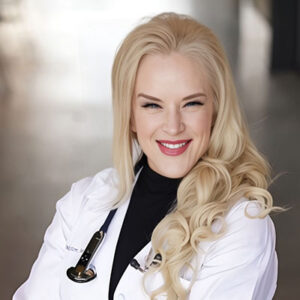
Dr. Marianne Pinkston Mueller, MD is the Co-Founder and Chief Medical Officer of NuBloom and a family and integrative medicine physician with over 25 years of clinical experience. She specializes in metabolic health, hormone optimization, and sustainable weight loss. After personally overcoming autoimmune disease, diabetes, and significant weight gain, Dr. Pinkston now focuses on helping patients improve long-term health through personalized, evidence-based care. Her areas of expertise include bio-identical hormone therapy, obesity medicine, thyroid disorders, autoimmune conditions, and preventive health.